



Low-Level Laser Hair Growth Helmets: A Data-Based Comparison of Performance and User Experience
2025-12-17 17:17Introduction: Why Technical Numbers Alone Don’t Tell the Full Story
Low-level laser therapy (LLLT) has become one of the most widely adopted non-invasive options for hair regrowth in patients with androgenetic alopecia. Over the past decade, the market has seen a rapid expansion of wearable laser helmets, many of which promote high diode counts or eye-catching design as their primary selling points.
However, from a clinical and engineering perspective, hair regrowth outcomes are not determined by diode quantity alone. Parameters such as single-diode output stability, effective irradiation dose, treatment duration, and real-life usability are far more relevant to both therapeutic response and long-term adherence.
To better understand these differences, we conducted a structured comparison of several commercially available low-level laser helmets, using measured parameters rather than marketing claims.
Study Scope and Comparison Framework
This evaluation focuses on a head-to-head technical and functional comparison between:
KN-8000B (KernelMed)
Competitor 1
Competitor 2
Competitor 3
Competitor 4
All devices are marketed as low-level laser hair growth helmets using semiconductor laser sources around the 650–655 nm range, which aligns with wavelengths most commonly studied in hair regrowth literature.
The comparison was conducted across three key dimensions:
Core hardware parameters
Energy delivery logic and treatment dose
Wearability, comfort, and practical usage factors
Hardware Parameters: Similar on Paper, Different in Practice
Wavelength and Laser Type
| Item | Kernel- KN-8000B | Competitor 1 | Competitor 2 | Competitor 3 | Competitor 4 |
| Appearance | 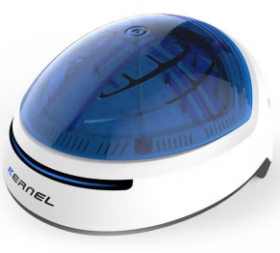 | 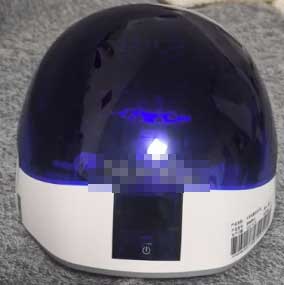 | 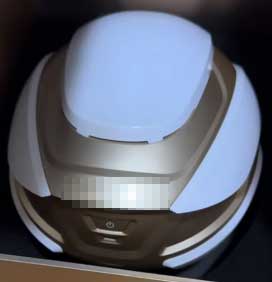 | 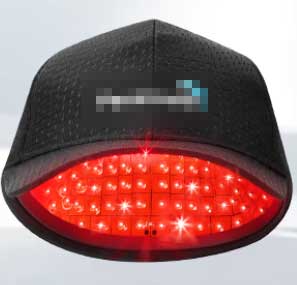 | 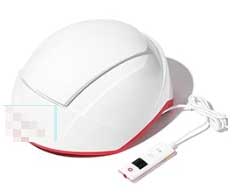 |
Internal Structure | 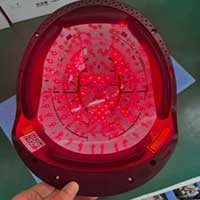 | 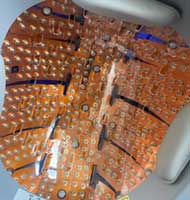 | 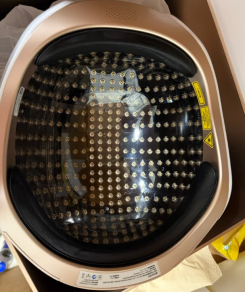 | 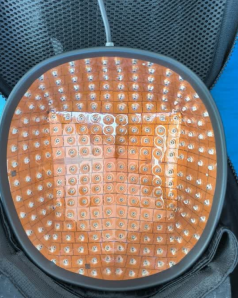 | 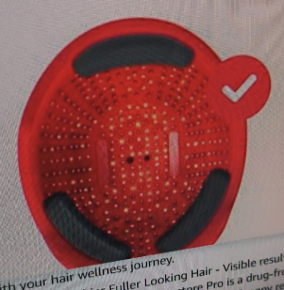 |
| Quantity of light source | 204pcs lds | 256/380pcs lds | 280/400pcs lds | 272pcs lds | 500pcs 300pcs lds+200pcs led |
| Wavelength | 655nm±5nm | 655nm±5nm | 655nm±10nm | 655nm±10nm | 655nm±10nm |
| Laser type | Semiconductor Laser | Semiconductor Laser | Semiconductor Lase | Semiconductor Lase | Semiconductor Lase |
| Laser power | 5mW±20% | 5mW±20% | 5mW±20% | 5mW±20% | 5mW±20% |
| Effective Irradiation Area | 370cm²±10% | / | 543cm²±10% | / | / |
| Power Supply Mode | Rechargeable built-in battery | Rechargeable built-in battery | Rechargeable built-in battery | AC-DC | AC-DC |
| Weight | 700g | 750g/780g | 840/870g | 250g | 595g |
| Battery Capacity | 3.7V/6000mAh | 7.4V/2200mAh | / | / | |
| Charging time | 6hrs | / | / | / | / |
| Battery Life | 60 mins | 60 mins/ 36mins | 60 mins | / | / |
All compared systems operate within the red-light laser spectrum (650–655 nm), using semiconductor laser diodes. This wavelength range is generally considered appropriate for targeting follicular metabolism and microcirculation.
From a wavelength standpoint alone, these devices appear comparable.
Diode Count vs. Effective Coverage
At first glance, some competing products appear superior due to higher diode counts—ranging from over 250 up to 500 combined laser and LED sources.
However, diode quantity does not directly equal effective treatment.
The KN-8000B utilizes 204 semiconductor laser diodes, paired with a clearly defined effective irradiation area of approximately 370 cm² (±10%). In contrast, several competitors either do not disclose effective coverage or rely on mixed laser–LED configurations, making true dose estimation difficult.
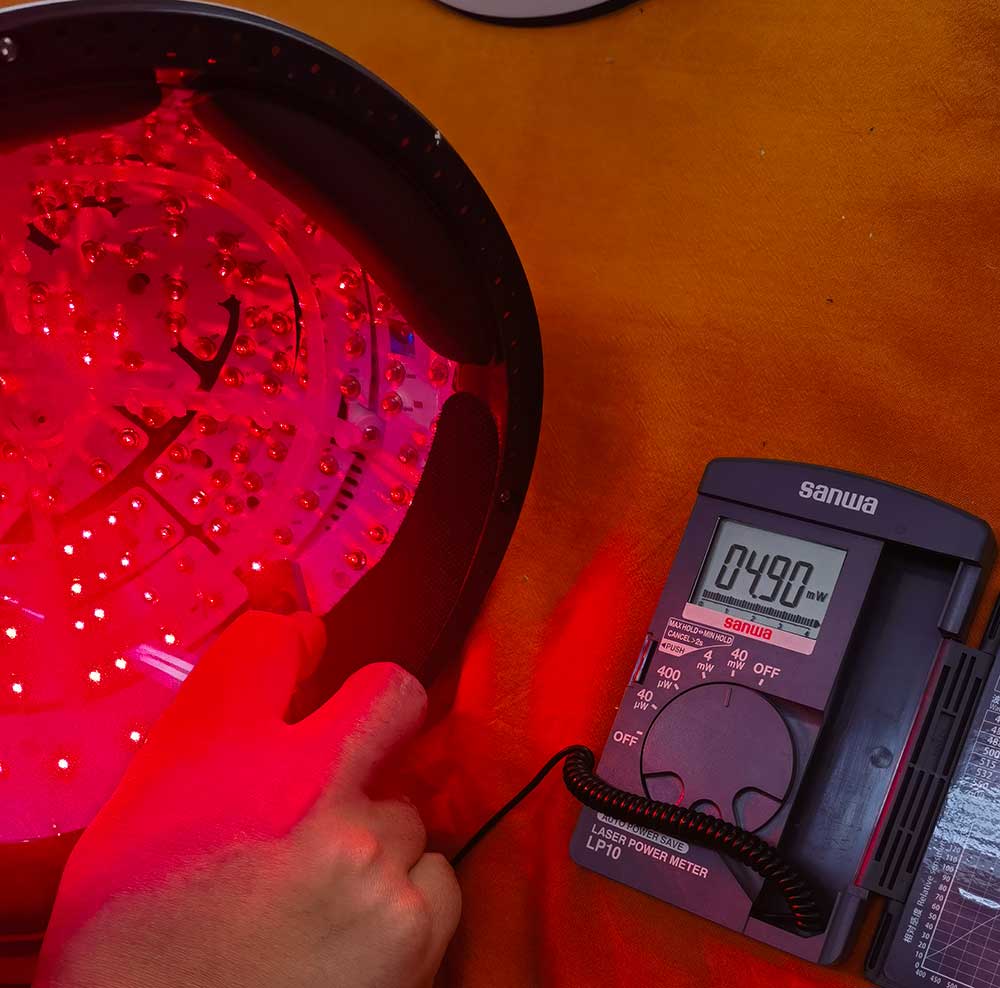
Power Output Stability: A Critical but Often Overlooked Factor
| item | Kernel KN-8000B | Competitor 1 | Competitor 2 |
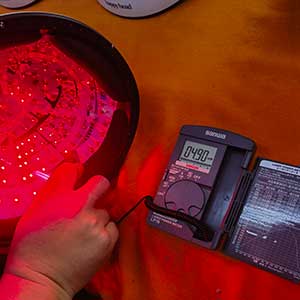 | 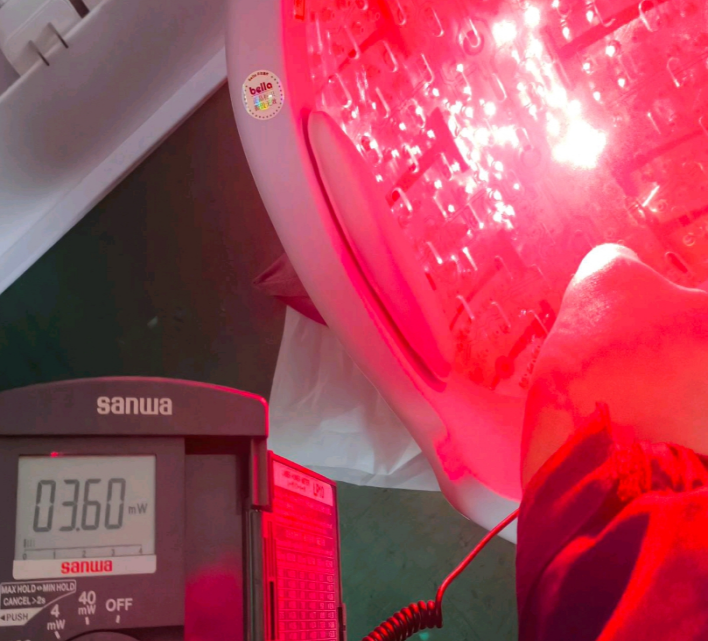 | 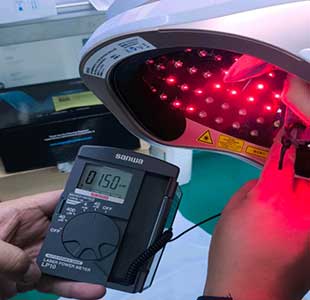 | |
| Measured Intensity | 4.90mW/cm2 | 3.6mW/cm2 | 1.5mW/cm2 |
During comparative testing, notable differences were observed in actual single-diode output stability:
Competitor 2 showed fluctuating output in the range of 1.0–1.7 mW
Competitor 1 averaged around 3.6 mW
KN-8000B demonstrated a more consistent output at approximately 4.38 mW
From a therapeutic standpoint, stable output is essential, as fluctuating power reduces dose predictability and may compromise treatment consistency over time.
Duty Cycle Comparison
Most competing low-level laser hair growth helmets on the market operate using pulsed emission modes, and in some cases even segmented pulsed irradiation, where different scalp regions are activated sequentially rather than simultaneously.
In contrast, the KN-8000B adopts a continuous wave (CW) irradiation mode, delivering uninterrupted laser output throughout the treatment session.
From a biophysical perspective, the duty cycle directly influences the effective delivered energy dose to the scalp tissue. Under otherwise identical conditions (laser count and nominal power), pulsed systems inherently reduce cumulative energy exposure due to their off-time intervals, whereas continuous irradiation allows for a more consistent photobiomodulation effect.
| Brand | Number of Lasers | Power per Laser | Total Output Power | Treatment Time | Duty Cycle | Energy Delivered per Session |
|---|---|---|---|---|---|---|
| Competitor 1 | 256 | 5 mW | 1280 mW | 20 min | 0.25 | 1.28 × 20 × 60 × 0.25 = 384 J |
| Competitor 2 | 280 | 5 mW | 1400 mW | 20 min | 0.5 | 1.4 × 20 × 60 × 0.5 = 840 J |
| KN-8000B | 204 | 5 mW | 1020 mW | 25 / 30 / 35 min | 1.0 | 1.02 × 25 × 60 × 1 = 1530J 1.02 × 30 × 60 × 1 = 1836 J 1.02 × 35 × 60 × 1 = 2142 J |
In practical application, continuous illumination (constant-on mode) is recommended. When targeting the same irradiation dose as competing devices (840 J per session), and based on the duty cycle characteristics and output parameters of the KN-8000B, the corresponding treatment duration and the number of active laser sources required to achieve an equivalent delivered dose (approximately 804 J) are outlined below.
Using a single-laser output power of 5 mW, the calculated configurations are as follows:
20-minute treatment
Required number of active laser sources:
n = 840 ÷ 20 ÷ 60 × 1000 ÷ 5 = 140 lasers
15-minute treatment
Required number of active laser sources:
n = 840 ÷ 15 ÷ 60 × 1000 ÷ 5 = 186 lasers
12-minute treatment
Required number of active laser sources:
n = 840 ÷ 12 ÷ 60 × 1000 ÷ 5 = 234 lasers
10-minute treatment
Required number of active laser sources:
n = 840 ÷ 10 ÷ 60 × 1000 ÷ 5 = 280 lasers
Based on the above data analysis, it can be concluded that the 204-laser configuration of the KN-8000B, with selectable treatment durations of 25, 30, and 35 minutes, is scientifically sound and clinically reasonable.
Wearability and User Experience: Why Comfort Matters Clinically
Weight and Ergonomics
| item | Kernel-8000B | Competitor 1 | Competitor 2 |
| Measured Weight |
677g |
767g |
860g |
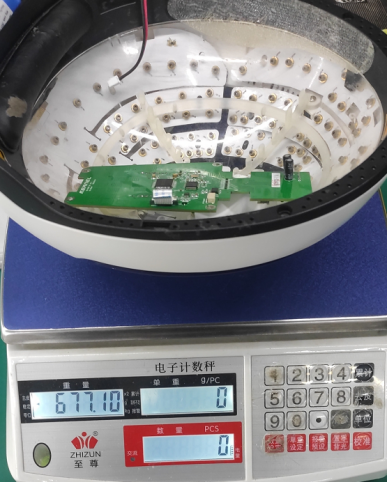
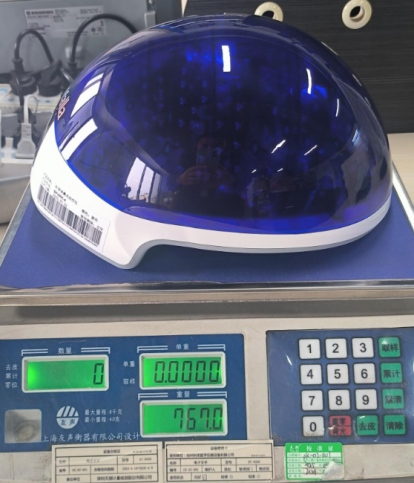
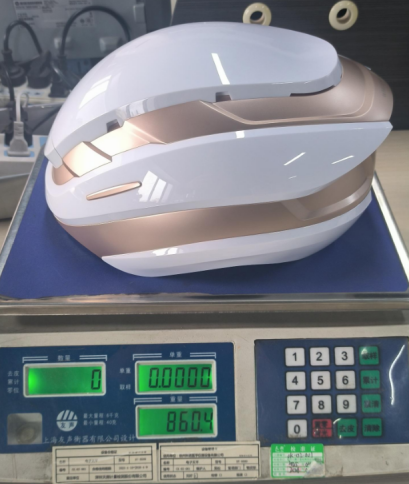
Weight differences may seem minor on paper, but they directly affect patient compliance:
Competitor 2: ~860 g
Competitor 1: ~767 g
KN-8000B: ~677 g
Lighter systems place less strain on the cervical spine and are more likely to be used consistently, particularly for long-term regimens.
Power Supply and Mobility
KN-8000B features an integrated battery system, allowing for cordless operation and greater flexibility in daily routines. In contrast, externally powered devices often restrict movement and reduce real-world adherence.
Interpreting the Data: What Actually Drives Better Outcomes?
This comparative evaluation highlights a critical point often missed in consumer-facing discussions:
More light sources do not automatically translate into better hair regrowth.
Instead, the most relevant factors include:
Stable single-diode power output
Predictable and sufficient energy dose per session
Continuous, uniform scalp coverage
Comfortable weight and practical usage design
From a clinical perspective, these elements collectively determine whether patients can maintain consistent treatment over the months required for visible hair regrowth.
Clinical and Market Implications
For dermatology clinics, distributors, and aesthetic institutions, devices that offer transparent parameters and controllable dosing logic are easier to integrate into standardized treatment protocols.
For individual users, comfort and flexibility significantly influence long-term compliance—often the deciding factor between theoretical efficacy and real-world results.
The KN-8000B’s configuration reflects an engineering approach that prioritizes dose integrity and usability, rather than relying solely on headline diode numbers.
Conclusion: Data-Driven Evaluation Over Marketing Metrics
This comparison reinforces an important principle in low-level laser therapy:
Effective hair regrowth is driven by how energy is delivered, not how impressively it is advertised.
By focusing on measurable output, controlled dosing, and real-world usability, clinicians and partners can make more informed decisions—grounded in data rather than assumptions.